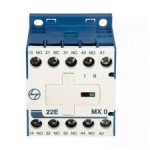
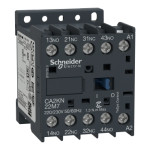
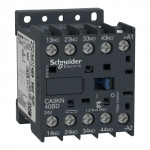
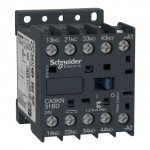
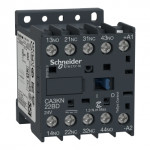
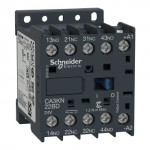
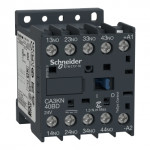
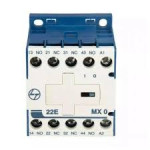
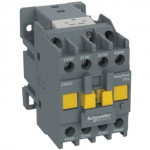
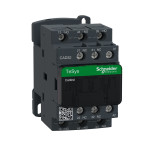
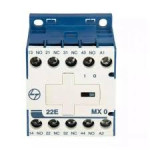
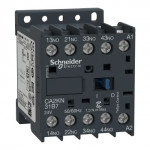
Buy Auxiliary Contactors Online at Electrihub
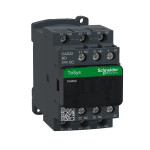
An auxiliary contactor is a supplementary switching device used alongside a main power contactor to provide additional control, interlocking, feedback, and signalling functions within electrical control panels and motor control circuits. While the main contactor carries the load current, auxiliary contactors operate on low-level control signals and manage the logic — making them essential components in DOL starters, star-delta starters, reversing circuits, interlocking schemes, and PLC-driven control panels.
Auxiliary contactors are rated and tested to IEC 60947-5-1 — the international standard for low-voltage control circuit devices. They are characterised by their contact configuration (NO/NC combinations), coil voltage, rated operational voltage (typically up to 690 V AC), and rated operational current (typically AC-15 and DC-13 duty). Unlike power contactors, auxiliary contactors are not rated for motor load switching — they switch only control-level signals.
At Electrihub we stock auxiliary contactors from the world's leading manufacturers — Schneider Electric, ABB, Siemens, Eaton, Lauritz Knudsen (L&T), Havells, HPL, and C&S Electric — covering standard add-on blocks, standalone auxiliary contactors, and electrically interlocked reversing contactors for every industrial and commercial control panel application.
Types of Auxiliary Contactors
Standalone Auxiliary Contactors
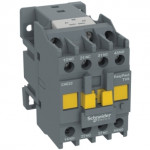
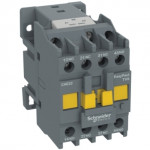
Standalone auxiliary contactors are independent switching devices mounted on a DIN rail, used to multiply the number of available control contacts beyond what is built into the main power contactor. They are energised by the same coil circuit as the main contactor or independently, and provide additional NO and NC contacts for interlocking, indication, and control logic. Common standalone models include the Schneider Electric CA2DN, ABB CA5-series, Siemens 3RH2, Eaton DILA, and Lauritz Knudsen MO series auxiliary variants.
Add-On Auxiliary Contact Blocks
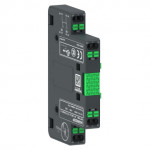
Add-on auxiliary contact blocks are modular accessories that snap onto the side or top of an existing power contactor to expand its built-in contact capacity. They are brand-specific and designed to mechanically interlock with the contactor body — no additional wiring harness is required. Each manufacturer provides matching contact blocks for their own contactor range. For example, Schneider Electric LADN blocks fit TeSys D/Deca contactors, ABB CA5-series blocks fit A-series contactors, and Siemens 3RH2911 blocks fit the 3RT2 family.
Electrically Interlocked Auxiliary Contactors
Electrically interlocked auxiliary contactors are used in reversing and star-delta starter circuits where two contactors must never close simultaneously. The interlock is achieved by wiring the NC contact of one contactor's auxiliary block into the coil circuit of the other — preventing both from energising at the same time. This is a fundamental safety requirement in reversing motor starters and forward-reverse circuits.
Mechanically Interlocked Auxiliary Contactors
Mechanical interlock kits physically prevent two contactors from closing at the same time through a shared lever mechanism, regardless of the electrical signal. They are used in critical reversing applications where electrical interlock alone is not sufficient. Most major brands supply mechanical interlock kits as accessories for their power contactor ranges.
Auxiliary Contactor Contact Configurations — NO, NC, and Combinations
NO (Normally Open) — The contact is open when the contactor coil is de-energised and closes when the coil is energised. Used for run indication, PLC feedback signals, and completing circuits that must only be active when the contactor is closed.
NC (Normally Closed) — The contact is closed when the coil is de-energised and opens when the coil is energised. Used for stop circuits, interlocking (preventing another device from energising), and fault indication circuits where the contact opening signals an active state.
1NO + 1NC — The most common standard auxiliary contact configuration, built into most power contactors as standard. Provides one feedback/run signal (NO) and one interlocking/stop contact (NC) simultaneously.
2NO + 2NC, 4NO, 4NC, 3NO + 1NC — Extended contact configurations available through add-on contact blocks for complex control schemes requiring multiple simultaneous signals — such as multi-motor interlocking, remote indication boards, and SCADA feedback wiring.
Auxiliary Contactor Brands and Series – Technical Comparison
The table below covers every auxiliary contactor brand and series stocked by Electrihub. Use the contact configuration, coil voltage, and compatible contactor columns to shortlist the right product, then follow the series link to browse available stock.
| Brand |
Series / Model |
Type |
Contact Configuration |
Rated Current (AC-15) |
Coil Voltage |
Compatible With |
Browse |
| Schneider Electric |
CA2DN (Standalone) |
Standalone |
2NO+2NC, 4NO, 4NC, 3NO+1NC, 2NO, 2NC |
10 A |
24 V DC, 48 V AC, 110 V AC, 230 V AC, 415 V AC |
Standalone / DIN rail |
View Products |
| Schneider Electric |
LADN (Add-on Block) |
Add-on Block |
1NO, 1NC, 1NO+1NC, 2NO, 2NC, 2NO+2NC, 4NO, 4NC |
10 A |
N/A (coilless — mounts on contactor) |
TeSys D / TeSys Deca (LC1D) |
View Products |
| Schneider Electric |
LAEN / LADS (Front Mount Block) |
Add-on Block |
1NO, 1NC, 2NO, 2NC, 1NO+1NC |
10 A |
N/A |
TeSys D / TeSys Deca (front mount) |
View Products |
| ABB |
CA5 / CAL5 (Standalone) |
Standalone |
4NO, 4NC, 2NO+2NC, 3NO+1NC, 1NO+3NC |
10 A |
24 V DC, 48 V AC, 110 V AC, 220 V AC, 230 V AC, 415 V AC |
Standalone / DIN rail |
View Products |
| ABB |
CA5-10 to CA5-40 (Side Mount) |
Add-on Block |
1NO, 1NC, 2NO, 2NC, 1NO+1NC, 2NO+2NC, 4NO, 4NC |
10 A |
N/A |
ABB A-series, AF-series, AL-series contactors |
View Products |
| ABB |
CAF / CAL (Front Mount) |
Add-on Block |
1NO, 1NC, 1NO+1NC, 2NO+2NC |
10 A |
N/A |
ABB A-series, AF-series (front mount) |
View Products |
| Siemens |
3RH2 (Standalone) |
Standalone |
4NO, 4NC, 2NO+2NC, 3NO+1NC, 1NO+3NC |
10 A |
24 V DC, 24 V AC, 48 V AC, 110 V AC, 230 V AC, 400 V AC |
Standalone / DIN rail |
View Products |
| Siemens |
3RH2911 (Side Mount Block) |
Add-on Block |
1NO, 1NC, 1NO+1NC, 2NO, 2NC, 2NO+2NC |
10 A |
N/A |
Siemens SIRIUS 3RT2 contactors |
View Products |
| Siemens |
3RT1916 (Front Mount Block) |
Add-on Block |
1NO, 1NC, 1NO+1NC |
10 A |
N/A |
Siemens 3RT2 (front mount, sizes S00–S3) |
View Products |
| Eaton (Moeller) |
DILA (Standalone) |
Standalone |
4NO, 4NC, 2NO+2NC, 3NO+1NC, 1NO+3NC |
10 A |
24 V DC, 24 V AC, 48 V AC, 110 V AC, 230 V AC, 400 V AC |
Standalone / DIN rail |
View Products |
| Eaton (Moeller) |
DILM-XHI (Side Mount Block) |
Add-on Block |
1NO, 1NC, 1NO+1NC, 2NO, 2NC, 2NO+2NC, 4NO, 4NC |
10 A |
N/A |
Eaton DILM series contactors |
View Products |
| Eaton (Moeller) |
DILM-XHI22 (Front Mount) |
Add-on Block |
2NO+2NC |
10 A |
N/A |
Eaton DILM series (front mount) |
View Products |
| Lauritz Knudsen |
MO Series (Standalone) |
Standalone |
2NO+2NC, 4NO, 4NC, 3NO+1NC, 1NO+3NC |
10 A |
24 V DC, 110 V AC, 220 V AC, 230 V AC, 415 V AC |
Standalone / DIN rail |
View Products |
| Lauritz Knudsen |
MNX Auxiliary Block |
Add-on Block |
1NO, 1NC, 1NO+1NC, 2NO, 2NC, 2NO+2NC |
10 A |
N/A |
Lauritz Knudsen MNX / ExceeD contactors |
View Products |
| Havells |
Auxiliary Contactor / Contact Block |
Standalone / Add-on |
2NO+2NC, 4NO, 4NC, 1NO+1NC |
10 A |
24 V DC, 110 V AC, 220 V AC, 415 V AC |
Havells D/E/F/G model contactors |
View Products |
| HPL Electric |
AFC Auxiliary Block |
Add-on Block |
1NO+1NC, 2NO+2NC, 4NO, 4NC |
10 A |
N/A |
HPL AFC / AL series contactors |
View Products |
| C&S Electric |
IC Auxiliary Block / CA Series |
Standalone / Add-on |
2NO+2NC, 4NO, 4NC, 1NO+1NC, 3NO+1NC |
10 A |
24 V DC, 110 V AC, 220 V AC, 415 V AC |
C&S IC series contactors / standalone DIN |
View Products |
All auxiliary contactors are certified to IEC 60947-5-1. Contact ratings shown are AC-15 duty at 230 V AC. Refer to individual product datasheets for DC-13 ratings and complete coil voltage availability.
About the Auxiliary Contactor Brands We Stock
Schneider Electric — CA2DN, LADN, LAEN Series
Schneider Electric offers one of the most comprehensive auxiliary contactor portfolios in the industry. The CA2DN series is a standalone auxiliary contactor for DIN rail mounting, available in multiple contact configurations (2NO+2NC, 4NO, 4NC, 3NO+1NC) with coil voltages from 24 V DC to 415 V AC. The LADN series is the matching side-mount add-on contact block for TeSys D and TeSys Deca power contactors, offering a complete range from 1NO to 4NO+4NC in a snap-on module that requires no tools or wiring. The LAEN and LADS series are front-mount auxiliary blocks for applications where side mounting is not possible. All Schneider auxiliary products conform to the TeSys modular ecosystem and are fully compatible with Acti9 and Easy9 distribution devices.
Browse All Schneider Auxiliary Contactors →
ABB — CA5, CAL, CAF Series
ABB's auxiliary contactor family supports both standalone and add-on configurations. The CA5 series is a standalone auxiliary contactor available in 4NO, 4NC, 2NO+2NC, 3NO+1NC, and 1NO+3NC configurations with coil voltages spanning 24 V DC to 415 V AC. The side-mount CA5-10 to CA5-40 contact blocks snap directly onto ABB A-series and AF-series power contactors, providing 1 to 4 additional contact elements without separate mounting. The CAF and CAL series are front-mount blocks for larger frame contactors. ABB auxiliary devices are IEC 60947-5-1 certified and support a high-cycle operation endurance suitable for demanding industrial applications.
Browse All ABB Auxiliary Contactors →
Siemens — 3RH2, 3RH2911, 3RT1916 Series
Siemens SIRIUS auxiliary contactors integrate seamlessly with the 3RT2 power contactor platform. The 3RH2 series is a standalone auxiliary contactor covering 4NO, 4NC, 2NO+2NC, 3NO+1NC, and 1NO+3NC configurations with coil voltages from 24 V DC to 400 V AC. The 3RH2911 series side-mount contact blocks snap directly onto 3RT2 contactors in sizes S00 to S3, delivering 1 to 4 additional contacts without tools. The 3RT1916 series provides front-mounting contact blocks for applications where the side positions are occupied. Siemens auxiliary contactors support IO-Link on larger assemblies, enabling digital feedback and diagnostics in Industry 4.0 control architectures.
Browse All Siemens Auxiliary Contactors →
Eaton (Moeller) — DILA, DILM-XHI Series
Eaton's auxiliary contactor range is built around the same modular platform as the DILM power contactor series. The DILA series is a compact standalone auxiliary contactor available in 4NO, 4NC, 2NO+2NC, 3NO+1NC, and 1NO+3NC with coil voltages from 24 V DC to 400 V AC. The DILM-XHI series side-mount contact blocks provide 1 to 4 additional contacts on any DILM series power contactor, with both snap-on side mounting and screw-terminal front mounting options. Eaton's auxiliary blocks are compatible with SmartWire-DT for decentralised wiring in advanced panel designs, reducing control wiring significantly in complex multi-motor installations.
Browse All Eaton Auxiliary Contactors →
Lauritz Knudsen — MO Series, MNX Auxiliary Blocks
Lauritz Knudsen (formerly L&T Electrical & Automation) provides auxiliary contactors and contact blocks certified to IS/IEC 60947-5-1, widely used in Indian industrial and infrastructure projects. The MO series standalone auxiliary contactor is available in 2NO+2NC, 4NO, and 4NC configurations with coil voltages from 24 V DC to 415 V AC. The MNX auxiliary contact blocks are designed to snap directly onto Lauritz Knudsen MNX ExceeD power contactors without tools. ISI marked and BIS compliant, Lauritz Knudsen auxiliary contactors are widely specified in MCC panels, DOL starters, and star-delta panels across Indian manufacturing and infrastructure projects.
Browse All Lauritz Knudsen Auxiliary Contactors →
Havells — Auxiliary Contactors and Contact Blocks
Havells offers ISI-marked auxiliary contactors and contact blocks to IEC 60947-5-1, designed to work with their D, E, F, G, and K model power contactor ranges. Available in standard contact configurations (1NO+1NC, 2NO+2NC, 4NO, 4NC) with coil voltages from 24 V DC to 415 V AC, Havells auxiliary contactors offer a cost-effective solution for Indian residential, commercial, and light-industrial motor control panels with the assurance of a wide local service network.
Browse All Havells Auxiliary Contactors →
HPL Electric — AFC Auxiliary Blocks
HPL Electric provides auxiliary contact blocks for their AFC and AL series power contactors, covering standard contact configurations from 1NO+1NC to 4NO+4NC. Competitively priced and IEC-rated, HPL auxiliary blocks are a practical choice for OEM panel builders and system integrators in South Asia requiring cost-effective supplementary contact capacity for their motor starter assemblies.
Browse All HPL Auxiliary Contactors →
C&S Electric — IC Auxiliary Blocks, CA Series
C&S Electric offers auxiliary contactors and contact blocks certified to IEC 60947-5-1 and IS standards, compatible with their IC series power contactors. Available in standalone and add-on configurations with contact options from 1NO+1NC to 4NO, C&S auxiliary contactors are widely used in government infrastructure projects, state electricity board installations, and large industrial MCC panels across India where IS-certified products are a tender requirement.
Browse All C&S Auxiliary Contactors →
Where Are Auxiliary Contactors Used?
DOL (Direct On-Line) Motor Starters — The built-in auxiliary contact of the main contactor is used for self-holding (latching) the run circuit after the start button is released, and for energising the run indicator lamp. Add-on blocks provide additional contacts for remote indication and interlocking.
Star-Delta Motor Starters — Three power contactors (main, star, delta) each require auxiliary contacts for interlocking — preventing the star and delta contactors from closing simultaneously, and sequencing the transition timer. Standalone auxiliary contactors or add-on blocks provide all required interlocking contacts.
Reversing Motor Starters — Forward and reverse contactors are electrically interlocked using the NC contacts of each contactor's auxiliary block wired into the other's coil circuit, preventing simultaneous closure and phase reversal under load.
Motor Control Centres (MCC) — MCC panels use auxiliary contactors extensively for remote run/stop indication, trip alarm circuits, auto-manual changeover interlocking, and feedback to SCADA systems and building management systems (BMS).
PLC and Automation Control Panels — Auxiliary contactors provide voltage isolation between PLC output signals (24 V DC) and field control circuits (230 V AC), protecting PLC output cards from voltage spikes and providing the additional contact capacity required by complex automation sequences.
Safety and Emergency Circuits — NC auxiliary contacts are used in safety relay circuits, emergency stop loops, and fault alarm panels where the opening of the contact (due to de-energisation) signals a fault or safe state to the control system.
How to Select the Right Auxiliary Contactor
Step 1 — Standalone or add-on block?
If you need additional contacts on an existing power contactor, use a matching add-on contact block from the same brand — this snaps directly onto the contactor body without additional wiring. If you need a separate, independently energised device for control logic, use a standalone auxiliary contactor mounted on a DIN rail next to the main contactor.
Step 2 — Determine the required contact configuration
Count the number of NO and NC contacts your circuit requires — for run indication, interlocking, PLC feedback, and alarm circuits combined. Select the configuration (2NO+2NC, 4NO, 4NC, etc.) that covers all requirements in a single device, minimising wiring complexity.
Step 3 — Select coil voltage (for standalone units)
Match the coil voltage to your control circuit — 24 V DC for PLC-driven panels, 110 V AC for safety circuits, 230 V AC for conventional relay-logic control panels. For add-on contact blocks, no coil is required — they are mechanically operated by the main contactor.
Step 4 — Confirm brand compatibility for add-on blocks
Add-on contact blocks are brand-specific and frame-size specific. A Schneider LADN block will not fit an ABB or Siemens contactor. Always match the add-on block to the exact brand and series of your power contactor. Refer to the compatibility column in the table above or contact Electrihub for guidance.
Step 5 — Check rated operational current and duty category
Auxiliary contactors are rated for control-level currents only — typically 10 A AC-15 at 230 V AC. Verify that the signals being switched (PLC outputs, indicator lamps, relay coils, timer coils) fall within the rated AC-15 or DC-13 capacity of the selected auxiliary contactor. Never use an auxiliary contactor to switch motor loads — use a power contactor for that purpose.
Key Technical Terms
AC-15 Duty
The standard duty category for auxiliary contactors switching electromagnetic loads (relay coils, contactor coils, solenoid valves) on AC circuits. The rated current at AC-15 is the current the auxiliary contact can make and break in this duty — typically 3 A or 6 A at 230 V AC for standard auxiliary contactors.
DC-13 Duty
The duty category for switching electromagnetic DC loads — PLC output relays, solenoids, and DC coils. DC-13 ratings are lower than AC-15 ratings for the same contact because DC arcs are harder to extinguish. Always check DC-13 ratings when using auxiliary contactors in 24 V DC control circuits.
Electrical Endurance
The total number of full-load switching operations an auxiliary contactor can perform at its rated AC-15 current. Typically 1–3 million operations for standard auxiliary contactors — significantly higher for silver alloy contact versions used in high-cycle applications.
Mirror Contact
A mirror contact (or mirror image contact) is a special NC contact in an auxiliary block that is certified to be open whenever all the NO main contacts of the contactor are closed, and vice versa. Mirror contacts are mandatory in safety-critical circuits (IEC 60947-4-1 Annex F) where positive confirmation of contactor state is required — such as in safety relay systems and SIL-rated control circuits.
Frequently Asked Questions — Auxiliary Contactors
What is the difference between an auxiliary contactor and a power contactor?
A power contactor switches the main load current (motor currents, heater loads, capacitor banks) and is rated in amperes AC-3. An auxiliary contactor switches only low-level control signals (relay coils, PLC inputs, indicator lamps) and is rated in amperes AC-15. Auxiliary contactors have smaller contacts, lower ratings, and are not suitable for switching motor loads directly.
Can I use an auxiliary contact block from one brand on another brand's contactor?
No. Auxiliary contact blocks are brand-specific and designed to mechanically snap onto a specific contactor body. A Schneider LADN block will physically not fit on a Siemens or ABB contactor. Always select the add-on block from the same manufacturer and verify compatibility with the specific contactor model and frame size.
What is self-holding (latching) in a motor starter circuit?
Self-holding means the contactor keeps itself energised after the start button is released, using a NO auxiliary contact wired in parallel with the start button. When the start button is pressed, the contactor energises; the auxiliary NO contact then closes, maintaining the coil circuit through a parallel path. The contactor stays energised until the stop button (wired as NC in series with the coil) is pressed.
How many auxiliary contacts does a typical DOL starter require?
A basic DOL starter requires a minimum of 1NO+1NC — the NO for self-holding and the NC for interlocking or indication. Most power contactors include 1NO+1NC as standard. Add-on blocks or standalone auxiliary contactors are needed when the circuit requires additional contacts for run lamps, remote indication, PLC feedback, or alarm outputs beyond the built-in contacts.
What is a mirror contact and when is it required?
A mirror contact is a certified NC contact that is guaranteed to be open whenever the main NO contacts are closed, and closed whenever the main contacts are open. Mirror contacts are required by IEC 60947-4-1 Annex F for safety-rated circuits where positive proof of contactor de-energisation is mandatory — for example, in safety relay loops, two-hand control circuits, and IEC 62061 / IEC 13849 functional safety applications.
What is the difference between side-mount and front-mount auxiliary blocks?
Side-mount blocks snap onto the left or right side of the contactor body. Front-mount blocks attach to the front face of the contactor, below the main terminals. When both side positions of a contactor are already occupied (by an overload relay on one side and an auxiliary block on the other), a front-mount block provides additional contact capacity. Always check the available mounting positions on your specific contactor before ordering.
Are Electrihub's auxiliary contactors original and genuine?
Yes. Electrihub sources all auxiliary contactors exclusively through authorised distribution channels directly from manufacturers. All products are supplied in original manufacturer packaging with full traceability, and manufacturer certificates of conformity are available on request.
Popular Rating of Auxiliary Contactors
4A Auxiliary Contactors, 10A Auxiliary Contactors, 16A Auxiliary Contactors
Number of Poles Auxiliary Contactors
3P Auxiliary Contactors, 4P Auxiliary Contactors
Categories in Contactors and Contactor Relays
Auxiliary Contactors |
Capacitor duty contactor |
Motor Protection Relay |
Motor Starter |
MPCB |
MPCB Accessories |
Over Load Relay |
Overload Relays Accessories |
Power Contactor |
Power Contactor Accessories |
Protective Relays |
Protective Relays Accessories