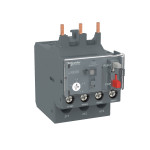
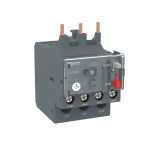
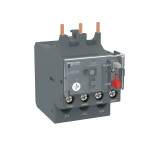
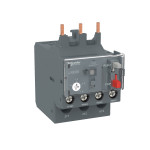
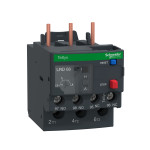
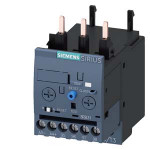
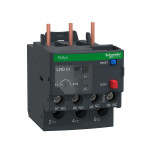
Buy Overload Relays Online at Electrihub
An Overload Relay is a dedicated motor protection device that monitors motor current continuously and disconnects the motor control circuit when it detects sustained overcurrent caused by mechanical overloads, single-phasing, phase imbalance, or locked-rotor faults — before heat accumulation damages the motor winding. Unlike a fuse or molded-case circuit breaker (MCCB), an overload relay is calibrated specifically to a motor's full-load ampere (FLA) rating and thermal time constant, enabling precise, coordinated protection that prevents motor burnout without nuisance tripping during normal acceleration.
Overload relays are installed in series with the main contactor in every motor starter configuration — Direct-On-Line (DOL), star-delta, part-winding, or soft-starter combinations. For the global and North American markets, overload relays must be rated and tested to UL 508 (Standard for Industrial Control Equipment) and CSA C22.2 No. 14 (Industrial Control Equipment) as required under the National Electrical Code (NEC) and Canadian Electrical Code (CEC). Products also carry IEC 60947-4-1 certification for IEC-standard projects worldwide. Key selection parameters include the relay type (thermal-bimetallic, electronic/digital, or solid-state), current setting range, trip class (Class 5, 10, 20, 30), phase-loss sensitivity, and reset mode (manual, automatic, or remote).
At Electrihub we supply overload relays from five globally certified brands — Schneider Electric, ABB, Siemens, Eaton, and Lauritz Knudsen (L&T) — with UL-listed and CSA-certified variants available across thermal bimetallic and electronic types, suitable for motor protection applications ranging from small commercial HVAC units to large industrial drives in North American, European, and export markets.
Types of Overload Relays — Thermal, Electronic, and Solid-State
Overload relays are classified into three principal types based on their sensing and operating mechanism. The correct type depends on the motor application, degree of protection required, available budget, and level of monitoring integration needed with plant control systems.
Thermal Bimetallic Overload Relay
The most widely deployed overload relay type in both IEC and North American markets. Thermal bimetallic relays operate through bimetallic strips that deflect as they absorb heat from the motor current flowing through them. When the current exceeds the set value for a sustained period, the strip deflects far enough to actuate the mechanical trip — opening the NC contact wired in series with the contactor coil. Trip time is inversely proportional to the degree of overcurrent, closely matching the thermal withstand curve of a standard induction motor winding. Thermal overload relays require no auxiliary supply voltage, are inherently robust, and are the industry-standard choice for DOL motor starters built to UL 508 and IEC 60947-4-1. Available in manual-reset and automatic-reset versions. Key brands: Schneider Electric LRD / LRF, ABB TA / T series, Siemens 3RU2 / 3RU1, Eaton ZB / ZE, Lauritz Knudsen MO.
Electronic (Digital) Overload Relay
Electronic overload relays use current transformers (CTs) to sample motor phase currents and a built-in microprocessor to continuously compute the motor's thermal state. This approach delivers a wider set of protection functions than thermal types — including phase-loss detection, phase-imbalance monitoring, ground-fault detection, direct winding temperature monitoring via PTC/thermistor input, and industrial communication ports (Modbus RTU, DeviceNet, PROFIBUS DP). Trip class, service factor, and FLA rating are fully programmable, and the relay provides diagnostic readouts including measured current per phase, trip history log, and time-to-trip. Electronic overload relays listed to both UL 508 and IEC 60947-4-1 are preferred for critical process motors, intelligent Motor Control Centres (MCCs), and any installation where remote monitoring or PLC/SCADA integration is required. Key brands: Schneider Electric LR9 D, ABB EF series, Siemens 3RB3, Eaton PKE/PKZ.
Solid-State Overload Relay
Solid-state overload relays perform the same current sensing and thermal modelling functions as electronic relays but use semiconductor output elements with no mechanical moving parts. This construction provides faster response times, superior resistance to shock and vibration, and extended service life in high-cycle-rate applications. Solid-state relays are the specification choice for demanding environments — mining, offshore platforms, petrochemical processing, and primary metals industries — where mechanical wear and false trips from vibration must be eliminated. They carry all the protection functions of electronic relays, with improved accuracy at low current settings, and are available with UL 508 and CSA C22.2 No. 14 listings on select series.
Overload Relay Trip Class — Class 5, 10, 20, 30 Explained
The trip class (or tripping class) defines the maximum time in seconds within which the relay must trip when carrying 7.2 times the set current from a cold state, as specified by IEC 60947-4-1 and recognised under UL 508. Matching the trip class to the motor's acceleration characteristics is essential — an incorrect trip class is one of the most frequent causes of both nuisance tripping and undetected motor overheating in industrial installations.
Trip Class 5 — Maximum Trip Time: 5 Seconds at 7.2× FLA
Class 5 is applied to very fast-starting motors where the thermal mass is low and the start-up current spike is brief — fractional-horsepower motors, small precision pumps, and servo drive applications. It is uncommon in general-purpose industrial motor starters but available on select electronic relay series including ABB EF and Siemens 3RB3.
Trip Class 10 — Maximum Trip Time: 10 Seconds at 7.2× FLA
Class 10 is the globally dominant trip class for standard induction motors — centrifugal pumps, HVAC fans, air compressors, conveyors, and general-purpose machinery. Under UL 508, Class 10 (sometimes labelled Class 10A on IEC-rated thermal relays) is the default specification for most motor branch circuits in North American industrial and commercial installations. It is the standard trip class shipped on Schneider LRD, ABB TA/T, Siemens 3RU2, and Eaton ZB series relays.
Trip Class 20 — Maximum Trip Time: 20 Seconds at 7.2× FLA
Class 20 is selected for motors with heavier starting loads or longer acceleration ramps — large centrifugal pumps against system head, loaded belt conveyors, and high-inertia rotating equipment. The extended tripping window allows full acceleration without a nuisance trip while still protecting the winding against sustained overcurrent. Class 20 is available on select thermal relay series and is standard on all electronic relay types.
Trip Class 30 — Maximum Trip Time: 30 Seconds at 7.2× FLA
Class 30 is specified for high-inertia industrial drives where the motor must sustain elevated current during a long start-up — large compressors, ball mills, primary crushers, and heavy mixer drives. Class 30 is exclusively an electronic or solid-state relay capability; thermal bimetallic elements cannot achieve this trip time reliably. When specifying Class 30, the upstream branch-circuit protection device (fuse or MCCB) must be coordinated carefully to maintain selectivity and comply with NEC Article 430 requirements for motor branch-circuit protection.
Key Technical Specifications for Overload Relay Selection
Full-Load Ampere (FLA) Setting Range
The relay's current setting range must encompass the motor's nameplate full-load ampere (FLA) rating at the operating voltage and frequency. The relay is adjusted via a calibrated rotary dial or digital parameter to match FLA exactly. Common ranges stocked: 0.1–0.16 A (micro-motors), 0.63–1 A, 4–6 A, 9–13 A, 18–25 A, 30–40 A, 48–65 A, 80–100 A, up to 820 A for large motor starter assemblies. UL 508 and NEC Article 430 require the overload device to be set no higher than 125% of motor FLA for motors with a service factor of 1.15 or greater.
Single-Phase (Phase-Loss) Sensitivity
Single-phasing — the loss of one phase of a three-phase supply — is one of the leading causes of motor failure in North American and global installations. When one supply phase is lost, the remaining two phases carry the full motor load, generating dangerously elevated winding temperatures within minutes. All overload relays supplied by Electrihub incorporate differential phase-loss sensitivity, detecting current imbalance between phases and tripping substantially faster than the relay would on standard overload alone. This protection function is essential for three-phase induction motors and is recognised as a best practice under NEMA MG-1 and NEC installation guidelines.
Reset Mode — Manual, Automatic, Remote
Manual reset: Requires an operator to physically press the reset button after a trip — the recommended default mode for attended industrial installations, ensuring the fault cause is identified before the motor restarts. Automatic reset: The relay self-resets after the thermal element has cooled to a safe state — used in unattended remote installations such as pump lift stations, rooftop HVAC units, and water booster sets. Remote reset: Standard on electronic relay types — allows reset via a digital input from a PLC, DCS, or SCADA system, eliminating the need for panel access in large or hazardous installations.
Auxiliary Contact Output — 1 NC + 1 NO
Standard overload relays provide one normally closed (NC) contact wired in series with the contactor coil circuit (drops out contactor on trip) and one normally open (NO) contact for fault indication, alarm relay, or PLC digital input. Electronic relays offer additional programmable output contacts and 4–20 mA analogue outputs for remote current monitoring and SCADA integration.
Mounting — Contactor-Mounted (Plug-In) vs. Stand-Alone
Contactor-mounted overload relays snap directly onto the load-side terminals of the matching contactor, creating a compact, factory-coordinated motor starter assembly with no intermediate wiring. Each manufacturer's overload relay is mechanically matched to their own contactor range: Schneider LRD onto LC1D, ABB TA onto A/AF series, Siemens 3RU2 onto 3RT2, Eaton ZB onto DILM. Stand-alone (chassis-mount) overload relays are independently panel-mounted and separately wired — required for current ranges above 100 A, retrofit applications, and bus-bar connected MCC starters.
PTC Thermistor Input
Many UL-listed electronic overload relays include a PTC (Positive Temperature Coefficient) thermistor input for connection to a sensor embedded directly in the motor winding. This enables protection against winding overtemperature in conditions where a current-based thermal model is insufficient — high ambient temperature environments, motors in enclosed or thermally insulated housings, and motors subject to frequent stop-start cycling. When a motor nameplate or project specification calls for thermistor protection (TP Class per NEMA MG-1), select an electronic overload relay with a dedicated PTC input.
Overload Relay Series — Technical Comparison by Brand
The table below compares every overload relay series stocked by Electrihub for the global and North American market. Use the type, FLA range, trip class, protection features, and certifications columns to identify the correct product, then click the series link to view available inventory.
| Brand |
Series / Range |
Type |
FLA Range |
Trip Class |
Phase-Loss Sensitivity |
Certifications |
Browse |
| Schneider Electric |
TeSys D — LRD Series (Thermal) |
Thermal Bimetallic |
0.1 A – 38 A |
Class 10A |
Yes |
UL 508, CSA C22.2 No. 14, IEC 60947-4-1, CE |
View Products |
| Schneider Electric |
TeSys F — LRF Series (Thermal) |
Thermal Bimetallic |
48 A – 820 A |
Class 10A |
Yes |
UL 508, CSA C22.2 No. 14, IEC 60947-4-1, CE |
View Products |
| Schneider Electric |
TeSys D — LR9D Electronic |
Electronic |
0.4 A – 30 A |
Class 10, 20, 30 |
Yes |
UL 508, CSA C22.2 No. 14, IEC 60947-4-1, CE |
View Products |
| ABB |
TA Series — TA25DU / TA75DU (Thermal) |
Thermal Bimetallic |
0.1 A – 93 A |
Class 10A / 20 |
Yes |
UL 508, CSA C22.2 No. 14, IEC 60947-4-1, CE |
View Products |
| ABB |
T Series — T25DU / T75DU (Thermal) |
Thermal Bimetallic |
0.63 A – 690 A |
Class 10A |
Yes |
UL 508, CSA C22.2 No. 14, IEC 60947-4-1, CE |
View Products |
| ABB |
EF Series — Electronic Overload |
Electronic |
0.3 A – 500 A |
Class 5, 10, 20, 30 |
Yes (+ Phase imbalance) |
UL 508, CSA C22.2 No. 14, IEC 60947-4-1, CE |
View Products |
| Siemens |
SIRIUS 3RU2 — Thermal |
Thermal Bimetallic |
0.11 A – 100 A |
Class 10A / 20 |
Yes |
UL 508, CSA C22.2 No. 14, IEC 60947-4-1, CE |
View Products |
| Siemens |
SIRIUS 3RB3 — Electronic / Solid-State |
Electronic / Solid-State |
0.3 A – 630 A |
Class 5, 10, 20, 30 |
Yes (+ Ground fault optional) |
UL 508, CSA C22.2 No. 14, IEC 60947-4-1, CE |
View Products |
| Siemens |
SIRIUS 3RU1 — Thermal (Stand-alone) |
Thermal Bimetallic |
0.11 A – 100 A |
Class 10A |
Yes |
UL 508, CSA C22.2 No. 14, IEC 60947-4-1, CE |
View Products |
| Eaton |
ZB / ZE Series — Thermal |
Thermal Bimetallic |
0.1 A – 100 A |
Class 10A / 20 |
Yes |
UL 508, CSA C22.2 No. 14, IEC 60947-4-1, CE |
View Products |
| Eaton |
PKE / PKZ — Electronic Motor Protective |
Electronic |
0.16 A – 32 A |
Class 10, 20, 30 |
Yes (+ Phase imbalance, PTC) |
UL 508, CSA C22.2 No. 14, IEC 60947-4-1, CE |
View Products |
| Lauritz Knudsen (L&T) |
MO Series — Thermal Overload |
Thermal Bimetallic |
0.1 A – 100 A |
Class 10A / 20 |
Yes |
IEC 60947-4-1, CE |
View Products |
UL 508 Listed and CSA C22.2 No. 14 Certified variants are available on select series from Schneider Electric, ABB, Siemens, and Eaton. Always verify individual product datasheets, coordination tables, and applicable market certifications before specifying. Contactor matching, cable sizing, and branch-circuit protection coordination must comply with NEC Article 430 or applicable local code.
Overload Relay Brands Available at Electrihub
Schneider Electric — TeSys D LRD, TeSys F LRF, LR9 Electronic
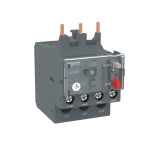
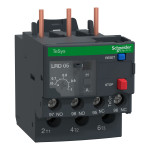
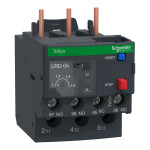
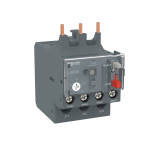
Schneider Electric's TeSys overload relay portfolio is among the most widely specified in North American and global industrial markets. The TeSys D LRD thermal overload relay covers 0.1 A to 38 A and mounts directly onto the LC1D TeSys D contactor, forming a compact DOL starter assembly rated to both UL 508 and IEC 60947-4-1. The LRD features Class 10A tripping, differential phase-loss sensitivity, selectable manual or automatic reset, and a built-in alarm contact for external fault indication. The TeSys F LRF series extends thermal overload protection to 820 A for large motor starters, listed under UL 508 and CSA. The LR9 D electronic overload relay offers programmable trip class (10, 20, 30), phase imbalance protection, PTC thermistor input, a 4–20 mA analogue current output for SCADA integration, and remote reset capability via digital input — the standard specification for intelligent MCC feeder units and critical process motor applications in both IEC and North American markets.
Browse All Schneider Electric Overload Relays →
ABB — TA Series, T Series, EF Electronic Overload Relays
ABB offers a comprehensive overload relay portfolio spanning compact thermal types to advanced electronic motor protection relays, all carrying dual UL 508 / CSA C22.2 No. 14 and IEC 60947-4-1 certification. The TA series (TA25DU, TA42DU, TA75DU, TA110DU) covers 0.1 A to 93 A and mounts onto ABB AF and A series contactors — the standard choice for ABB motor starter assemblies built to North American and IEC standards. The T series (T25DU through T200DU) extends thermal overload coverage to 690 A for large industrial drives. The EF series electronic overload relay provides Class 5, 10, 20, and 30 protection from 0.3 A to 500 A, with fully programmable FLA settings, phase-imbalance and ground-fault protection, PTC thermistor input, and optional Modbus RTU or DeviceNet communication for integration into DCS and SCADA systems. ABB overload relays are the standard choice for ABB-equipped motor starter assemblies, switchgear lineups, and intelligent MCC designs for oil and gas, water treatment, mining, and power generation facilities worldwide.
Browse All ABB Overload Relays →
Siemens — SIRIUS 3RU2, 3RU1, 3RB3 Overload Relays
Siemens' SIRIUS overload relay family carries simultaneous UL 508, CSA C22.2 No. 14, and IEC 60947-4-1 listings, making it one of the most globally versatile overload protection ranges available. The 3RU2 contactor-mounted thermal overload relay plugs directly onto the SIRIUS 3RT2 contactor — covering 0.11 A to 100 A in Class 10A and Class 20, with differential phase-loss sensitivity and a compact form factor that suits panel-mount and busbar-connected MCC applications. The 3RU1 is the independently mounted stand-alone version for retrofit and separate-installation designs. The 3RB3 solid-state overload relay is Siemens' premium electronic protection device, offering selectable trip class (5, 10, 20, 30) across 0.3 A to 630 A, phase-loss and ground-fault protection, PTC input, and IO-Link / PROFIBUS communication for integration with Siemens SIMATIC PLC and TIA Portal automation systems. The 3RB3 is widely specified in automotive manufacturing, food and beverage processing, petrochemical, and heavy-industry applications globally.
Browse All Siemens Overload Relays →
Eaton — ZB/ZE Thermal, PKE/PKZ Electronic Motor Protective Relays
Eaton's overload relay range is built for dual-market compliance, with all series carrying UL 508 Listed and CSA C22.2 No. 14 Certified ratings alongside IEC 60947-4-1 approval — an important advantage for OEM machine builders exporting to both North American and international markets. The ZB and ZE series thermal overload relays cover 0.1 A to 100 A and clip directly onto Eaton DILM series contactors, providing Class 10A and Class 20 protection with differential phase-loss sensitivity. The PKE and PKZ series are electronic motor protective circuit breakers combining overload relay and branch-circuit protection in a single UL-listed, NEC Article 430-compliant device — Class 10, 20, and 30 programmable, 0.16 A to 32 A, with phase-imbalance detection, PTC thermistor input, and remote trip and reset. The PKZ is the preferred single-device motor branch protection solution for UL-labeled control panels and North American OEM machinery exports.
Browse All Eaton Overload Relays →
Lauritz Knudsen (L&T) — MO Series Thermal Overload Relays
Lauritz Knudsen (formerly L&T Electrical & Automation) manufactures IEC 60947-4-1 certified thermal overload relays across the MO series range, covering 0.1 A to 100 A in Class 10A and Class 20. The MO series mounts directly onto Lauritz Knudsen MNX series contactors, providing a coordinated thermal motor starter assembly certified to IEC standards. Phase-loss sensitivity, manual and automatic reset, and a compact footprint make MO series relays a cost-competitive choice for large-volume IEC-standard industrial projects in Asia, the Middle East, Africa, and export-compliant projects globally. Note: Lauritz Knudsen MO series is IEC 60947-4-1 and CE marked; for UL 508 or CSA C22.2 No. 14 compliance on North American projects, please select Schneider Electric, ABB, Siemens, or Eaton series above.
Browse All Lauritz Knudsen Overload Relays →
Industrial and Commercial Applications for Overload Relays
DOL Motor Starters (NEC Article 430 / IEC Installations) — Every Direct-On-Line motor starter requires a contactor and an overload relay wired in series. For NEC-compliant installations in the USA, the overload relay must be UL 508 Listed and set per NEC Article 430.32 (no higher than 125% FLA for motors with 1.15 SF or greater). For IEC-standard projects internationally, IEC 60947-4-1 certified relays are specified. Dual-listed products satisfy both requirements from a single unit.
Motor Control Centres (MCCs) — Intelligent and Standard — Industrial MCCs incorporate an overload relay in each motor feeder section. For standard MCCs, thermal overload relays are used in each fixed or withdrawable starter bucket. For intelligent MCCs in process industries — oil and gas, chemical, water and wastewater, mining, power generation — electronic overload relays with Modbus RTU or PROFIBUS communication are specified to enable remote motor current monitoring, trip logging, and predictive maintenance from a plant DCS or SCADA system.
Star-Delta Starters and Soft-Starter Applications — In star-delta starter configurations, the overload relay is rated for the motor's FLA at delta running condition (approximately 58% of motor rated current). Where a soft-starter is used, an overload relay is typically installed on the soft-starter output as a running overload protection device, complementing the soft-starter's internal electronic protection for applications where the soft-starter manufacturer does not provide certified UL/IEC thermal overload protection.
Commercial HVAC and Building Mechanical Services — Chiller compressor motor protection, AHU supply and return fan motors, cooling tower fans, and hydronic pump motors in commercial building systems are protected by Class 10 or Class 20 overload relays. UL 508 Listed relays with automatic reset are standard in unattended mechanical plant rooms and rooftop units. Electronic relays with Modbus output are increasingly specified in BAS (Building Automation System) integrated HVAC motor control panels.
Water, Wastewater, and Municipal Infrastructure — Pump lift stations, water booster sets, and sewage ejector stations depend on overload relays with automatic reset for continuous unattended operation. Phase-loss sensitivity is a critical protection requirement in these applications, where loss of one phase on a submerged submersible pump motor results in rapid motor failure. UL 508 Listed relays are required for municipal water infrastructure projects in North America.
OEM Machine Building — Dual IEC + UL Compliance — Machine builders and panel manufacturers supplying equipment to both North American and export markets benefit from specifying dual-listed overload relays (UL 508 + IEC 60947-4-1) — such as Schneider LRD, ABB TA/EF, Siemens 3RU2/3RB3, or Eaton ZB/PKE. A single UL-listed and IEC-certified motor starter assembly can ship to any global market without redesign, reducing engineering cost, BOM complexity, and inventory.
Hazardous Area and Process Industry Installations — Electronic overload relays with PTC thermistor inputs are specified in process industry motor applications where ambient temperatures are elevated or motors are in enclosed housings. For ATEX/IECEx classified hazardous areas, the overload relay assembly must be rated for the zone classification and installed in a certified Ex e or Ex d enclosure as required. NEC Class/Division or Zone classified installations in North America additionally require UL or FM approved overload protection equipment per applicable Articles 500–516.
How to Specify the Correct Overload Relay — Step-by-Step Guide
Step 1 — Identify the motor nameplate full-load ampere (FLA) rating
Read the motor nameplate FLA at the supply voltage and frequency in use. This is the primary selection parameter. The relay current setting range must include the FLA value so the dial or parameter can be set precisely. For NEC installations, the overload device setting limit is defined by NEC Article 430.32 based on motor service factor and type.
Step 2 — Determine the required trip class
Select Class 10 for standard motors — pumps, fans, compressors, and general-purpose applications. Select Class 20 for motors with extended start-up times or heavier starting loads — large centrifugal pumps, loaded conveyors. Select Class 30 for very high-inertia drives requiring long start-up periods — ball mills, primary crushers, large compressors. Verify that the selected trip class coordinates with the upstream branch-circuit fuse or MCCB per NEC Article 430 or IEC 60947 motor starter coordination tables.
Step 3 — Select thermal or electronic type
Specify a thermal bimetallic overload relay for standard motor applications where cost, simplicity, and no-auxiliary-power operation are priorities. Specify an electronic overload relay where programmable trip class, phase-imbalance alarm, PTC thermistor input, communication interface, or remote reset are required — critical process motors, variable ambient temperature environments, intelligent MCCs, and remote or unmanned installations.
Step 4 — Confirm contactor compatibility and mounting configuration
For new motor starter assemblies, select a contactor-mounted overload relay from the same manufacturer and series as the contactor: Schneider LRD onto LC1D, ABB TA onto A/AF, Siemens 3RU2 onto 3RT2, Eaton ZB onto DILM. This ensures correct mechanical fit, published coordination data, and UL/IEC listed starter assembly compliance. For current ranges above 100 A, retrofits, or separate-mount applications, select a stand-alone chassis-mount relay with independent wiring.
Step 5 — Choose the reset mode for the installation type
Use manual reset as the default for attended industrial locations — ensures fault investigation before motor restart. Use automatic reset for unattended pump stations, HVAC units, and remote facilities where automatic restart after thermal recovery is operationally required. Use remote reset on electronic relays for PLC or SCADA-controlled motor starters in intelligent MCC or DCS-integrated installations.
Step 6 — Verify the required market certifications
For North American projects (USA and Canada), specify UL 508 Listed and CSA C22.2 No. 14 Certified overload relays — mandatory for NEC and CEC compliant motor branch circuit protection. For IEC-standard projects (Europe, Middle East, Asia, Africa, Australia), specify IEC 60947-4-1 certified relays. For projects requiring compliance with both standards, select dual-listed products: Schneider LRD / LRF, ABB TA / EF, Siemens 3RU2 / 3RB3, or Eaton ZB / PKE — all carrying simultaneous UL 508, CSA C22.2 No. 14, and IEC 60947-4-1 certification.
Frequently Asked Questions — Overload Relays
What is the difference between a UL 508 Listed and an IEC 60947-4-1 overload relay?
UL 508 is the North American standard for industrial control equipment, required under the National Electrical Code (NEC) and the Canadian Electrical Code (CEC/CSA). IEC 60947-4-1 is the international standard for contactors and motor-starters, specified on IEC-standard projects in Europe, the Middle East, Asia, Africa, and Australia. The standards differ in testing methodology, coordination requirements, and approval body. Dual-listed overload relays — such as Schneider LRD, ABB TA/EF, Siemens 3RU2/3RB3, and Eaton ZB/PKE — carry both certifications simultaneously and allow a single product to be used on any global project without re-specification.
What does NEC Article 430 require for motor overload protection?
NEC Article 430.32 requires that each continuous-duty motor rated more than 1 HP be protected against overload by an approved overload device. For motors with a nameplate service factor of 1.15 or greater, the overload device must be set to trip at no more than 125% of motor FLA. For motors with a service factor below 1.15 or temperature rise above 40°C, the setting limit is 115% of FLA. UL 508 Listed overload relays with adjustable current settings are the standard means of compliance with NEC 430.32.
What is the difference between a thermal overload relay and an electronic overload relay?
A thermal bimetallic overload relay trips through the mechanical deflection of bimetallic strips heated by motor current — simple, reliable, and requiring no auxiliary supply. An electronic overload relay uses current transformers and a digital thermal model to compute motor heat state continuously, offering programmable trip class, phase-imbalance and ground-fault detection, PTC thermistor input, communication outputs, and remote reset. Electronic relays are preferred for critical process motors, large drives, and intelligent MCC applications; thermal relays are the standard for general-purpose motor starters.
What is trip class and why does it matter?
Trip class specifies the maximum time in seconds the relay takes to trip at 7.2 times the set current from a cold start, per IEC 60947-4-1 and UL 508. Class 10 trips within 10 seconds — the standard for most motors. Class 20 (within 20 seconds) is for motors with longer acceleration times. Class 30 (within 30 seconds) is for very high-inertia drives requiring a long start. Specifying the wrong class causes nuisance tripping (too fast) or undetected motor overheating (too slow).
Can I mix overload relay and contactor brands?
No. Contactor-mounted (plug-in) overload relays are mechanically and electrically matched to their specific contactor family. A Schneider Electric LRD relay is designed exclusively for the LC1D TeSys D contactor; it will not fit or coordinate correctly on an ABB or Siemens contactor. Always specify the overload relay from the same manufacturer and product family as the contactor to ensure mechanical fit, published coordination data, and maintained UL/IEC listed assembly status.
What does phase-loss sensitivity mean in an overload relay?
Phase-loss sensitivity enables the overload relay to detect single-phasing — the loss of one phase of a three-phase supply. On phase loss, the remaining two phases carry the full load current and the motor overheats rapidly. A phase-loss sensitive relay detects the resulting current imbalance between phases and trips significantly faster than it would on standard overload alone, providing essential motor protection in installations where supply quality is variable or phase conductor integrity is a risk.
What is the difference between an overload relay and an MPCB?
An overload relay — used with a separate contactor — provides thermal overload and phase-loss protection but has no short-circuit interrupting capability; a separate fuse or MCCB is required for branch-circuit short-circuit protection per NEC Article 430.52. An MPCB (Motor Protection Circuit Breaker), such as the Eaton PKZ or Schneider GV2/GV3, combines motor overload protection and short-circuit interrupting capacity in a single UL-listed device, eliminating the need for a separate circuit breaker. MCPBs simplify NEC 430 compliance and are preferred for OEM machine control panels; separate contactor + overload relay assemblies are standard for industrial switchgear and MCC lineups.
Which overload relay series carry both UL 508 and IEC 60947-4-1 listings?
The following series stocked at Electrihub carry simultaneous UL 508 Listed, CSA C22.2 No. 14 Certified, and IEC 60947-4-1 approval: Schneider Electric LRD (TeSys D) and LRF (TeSys F); ABB TA series, T series, and EF series; Siemens SIRIUS 3RU2, 3RU1, and 3RB3; Eaton ZB/ZE series and PKE/PKZ series. These dual-certified products are the recommended choice for OEM panel builders and machine manufacturers supplying equipment to North American and international markets from a single product design.
How do I set the current on a thermal overload relay?
Rotate the front-panel adjustment dial to align the pointer with the motor's nameplate FLA value. The dial is graduated between the relay's minimum and maximum current range. For NEC-compliant installations, the setting must not exceed the limits of NEC Article 430.32 for the motor's service factor class. Always verify FLA corresponds to the supply voltage in use — motor nameplate FLA changes with voltage.
What is the difference between manual and automatic reset modes?
In manual reset mode, the relay latches open after tripping and requires an operator to press the physical reset button before the motor can restart — the recommended default mode, ensuring faults are investigated before restart. In automatic reset mode, the relay self-resets after the thermal element cools sufficiently. A manual/automatic selector switch is standard on most relay types. Manual reset is required by many industrial safety standards for attended equipment; automatic reset is used in unattended remote installations where automatic motor restart after a transient event is operationally necessary.
Popular Brands of Overload Relay
ABB Overload Relay |
Eaton Overload Relay |
L&T Overload Relay |
Siemens Overload Relay |
Schneider Overload Relay
Categories in Contactors and Contactor Relays
Auxiliary Contactors |
Capacitor Duty Contactor |
Motor Protection Relay |
Motor Starter |
MPCB |
MPCB Accessories |
Over Load Relay |
Overload Relay Accessories |
Power Contactor |
Power Contactor Accessories |
Protective Relays |
Protective Relays Accessories